New Generation of Quantum Computing Processors Announced
Quantum computing has long been a field of intense research, with each new milestone bringing the promise of practical applications closer to reality. Recently, a team of researchers announced the development of a quantum processor featuring 1000 qubits, a significant increase from previous generations. This advancement, reported by TechPulse, highlights ongoing efforts to scale quantum systems while addressing fundamental challenges such as error correction and coherence. The processor represents a step forward in the quest for quantum advantage in areas like drug discovery and complex optimization.
The announcement details a processor that leverages superconducting qubits arranged in a lattice, allowing for greater connectivity and control. According to information shared with TechPulse, the design incorporates improvements in gate fidelity and noise reduction, which are critical for maintaining the integrity of quantum states. While the system is still experimental, it provides a platform for testing algorithms that could eventually tackle problems beyond the reach of classical computers.
This development comes amid a broader push in the quantum computing ecosystem, where both academic institutions and private companies are investing heavily in hardware and software. The focus is not only on increasing qubit count but also on improving the quality of operations and the reliability of results. The 1000-qubit processor is a notable achievement, though researchers caution that further work is needed to achieve fault-tolerant quantum computation.
Understanding Qubits and Quantum Processors
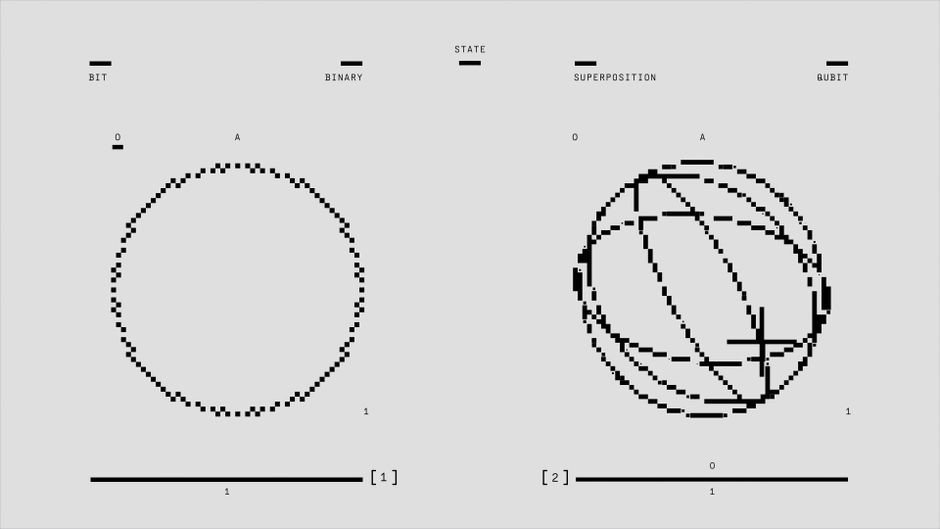
Qubits, or quantum bits, are the fundamental units of information in quantum computing. Unlike classical bits, which can be either 0 or 1, qubits can exist in a superposition of both states simultaneously. This property, along with entanglement, enables quantum processors to perform certain calculations exponentially faster than classical counterparts. However, qubits are highly sensitive to environmental disturbances, making error correction a central challenge.
Quantum processors are built using various physical implementations, such as superconducting circuits, trapped ions, or photonic systems. Each approach has its own trade-offs in terms of qubit coherence times, gate speeds, and scalability. The newly announced processor uses superconducting qubits, which are fabricated on a chip and cooled to near absolute zero to operate. The design includes a network of qubits that can be individually addressed and coupled, allowing for complex quantum operations.
The process of building a quantum processor involves meticulous calibration and testing. Researchers must characterize each qubit’s properties and adjust control parameters to minimize errors. The 1000-qubit milestone required advances in fabrication techniques and control electronics to maintain uniformity across the chip. These engineering efforts are crucial for scaling up to larger systems that could one day outperform classical supercomputers.
The Significance of 1000 Qubits
Reaching 1000 qubits is a numerical landmark, but its true significance lies in what it enables for error correction and algorithm development. In current quantum processors, qubits are not perfect; they are prone to errors from decoherence and operational faults. To achieve reliable computation, multiple physical qubits are often used to encode a single logical qubit through error-correcting codes. With 1000 physical qubits, researchers can explore more sophisticated error correction schemes and potentially implement logical qubits with lower overhead.
Moreover, having a larger number of qubits allows for the exploration of quantum algorithms that require more resources. For example, variational algorithms used in chemistry and optimization often involve many qubits to represent molecular orbitals or combinatorial variables. With 1000 qubits, researchers can model larger systems than previously possible, though the accuracy remains dependent on gate fidelity and noise levels. The processor provides a testbed for developing and benchmarking such algorithms in a controlled environment.
It is important to note that the number of qubits alone does not determine computational power. Metrics like quantum volume, which factors in error rates and connectivity, provide a more complete picture. The 1000-qubit processor is part of a broader effort to improve these metrics. Researchers emphasize that the path to practical quantum computing involves simultaneous progress in qubit quality, connectivity, and classical control systems.
Potential Applications in Drug Discovery
Drug discovery is one of the domains where quantum computing could have a transformative impact. The process of developing new pharmaceuticals often involves simulating molecular interactions, which is computationally intensive for classical computers. Quantum processors, by naturally representing quantum mechanical systems, may one day simulate molecules with high accuracy, potentially shortening the time required to identify promising drug candidates.
The 1000-qubit processor could be used to explore small molecular systems relevant to drug design. For instance, researchers might simulate the electronic structure of a protein binding site or the reaction pathways of a drug molecule. However, such simulations require high-fidelity gates and the ability to handle complex Hamiltonians. Current quantum processors do not yet achieve the precision needed for reliable pharmaceutical predictions, but the new processor provides a platform for developing and testing approximation methods.
Collaborations between quantum computing researchers and pharmaceutical companies are already exploring hybrid approaches, where quantum processors handle specific subproblems within a classical workflow. The availability of more qubits enables larger simulations, but the integration with classical methods remains a key area of development. The trajectory suggests that incremental improvements in qubit count and error rates could gradually bring quantum-assisted drug discovery closer to practical use, though no timeline is guaranteed.
Complex Optimization Problems
Optimization problems are pervasive in fields such as logistics, finance, and engineering. Many of these problems are NP-hard, meaning that classical algorithms struggle to find optimal solutions for large instances. Quantum algorithms, such as the Quantum Approximate Optimization Algorithm (QAOA), are designed to find approximate solutions by exploiting quantum parallelism. The 1000-qubit processor offers a larger search space for testing these algorithms on problems of increasing size.
In optimization, the relationship between problem size and qubit requirements is not always linear. Some problems can be mapped to qubits using binary variables, while others require more complex encodings. With 1000 qubits, researchers can tackle problems with hundreds of variables, though the quality of the solution depends on the algorithm’s depth and the processor’s noise characteristics. The processor allows for empirical studies of how quantum optimization performs under realistic conditions.
Current research focuses on understanding the limitations of near-term quantum devices for optimization. Studies indicate that while small-scale demonstrations show promise, scaling up requires advances in error mitigation and algorithm design. The 1000-qubit processor provides a valuable resource for gathering data on how noise affects optimization outcomes, which can inform the development of more robust quantum algorithms. This empirical approach is essential for moving from theoretical potential to practical applicability.
Challenges and Next Steps
Despite the excitement surrounding the 1000-qubit announcement, several challenges remain before quantum processors can solve real-world problems reliably. Error rates in two-qubit gates and readout operations are still high relative to the requirements for fault-tolerant computation. Researchers are actively working on improving coherence times and developing error correction codes that can be implemented with limited overhead. The processor serves as a platform to test these techniques at scale.
Another challenge is the development of quantum software and algorithms that can leverage the available qubits effectively. Many algorithms require long coherence times and precise control, which are difficult to achieve simultaneously. The quantum computing community is exploring hybrid quantum-classical algorithms that run partial computations on the quantum processor and handle the rest on classical hardware. These approaches are being refined using devices like the 1000-qubit processor.
This milestone demonstrates the progress in hardware engineering, but we are still in the early stages of understanding how to best utilize these systems for practical applications. The focus now is on improving gate fidelities and developing error mitigation strategies that can bridge the gap to fault tolerance.
Looking ahead, researchers anticipate continued scaling of qubit numbers, accompanied by improvements in gate quality. The next steps involve integrating more qubits while maintaining or reducing error rates, as well as developing robust calibration and control systems. Collaboration across disciplines—physics, computer science, and domain-specific fields—will be essential to address the remaining obstacles. The 1000-qubit processor is not the end goal but rather a stepping stone toward quantum systems that can perform calculations beyond the reach of classical computers in a reliable and reproducible manner.